GEOTECHNICAL ENGINEERING
HUNTSVILLE
HomeGround improvementVibrocompaction design

Vibrocompaction Design in Huntsville: Ground Improvement for Karst and Residual Soils

Geotechnical engineering with regional judgment.

LEARN MORE

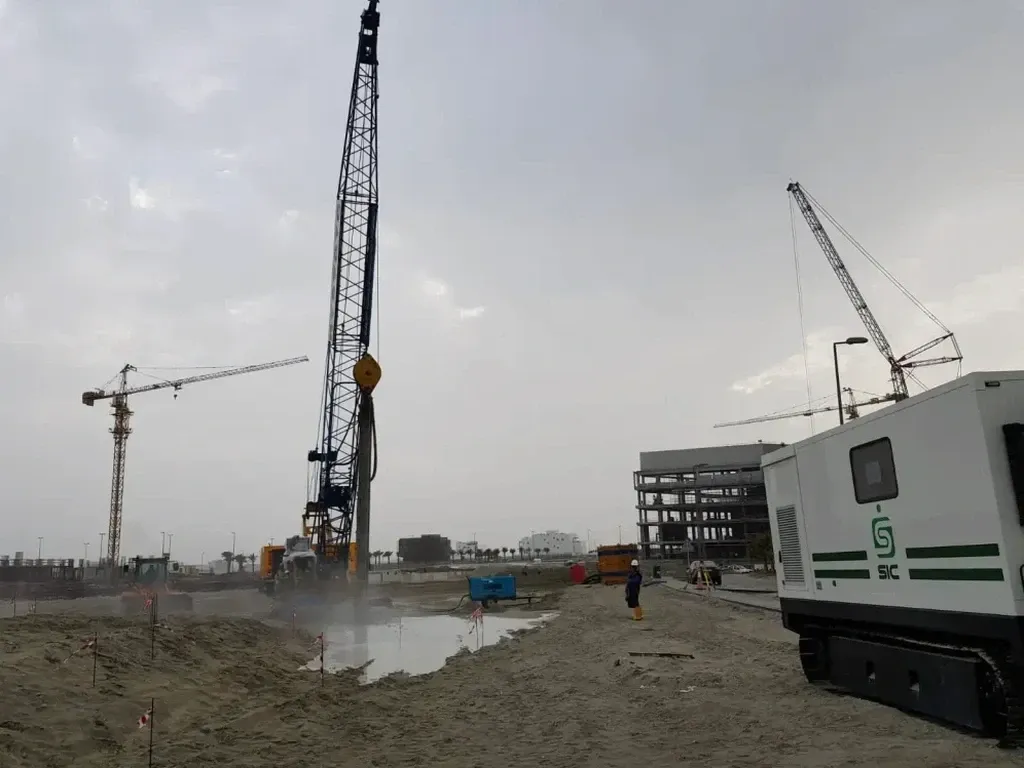
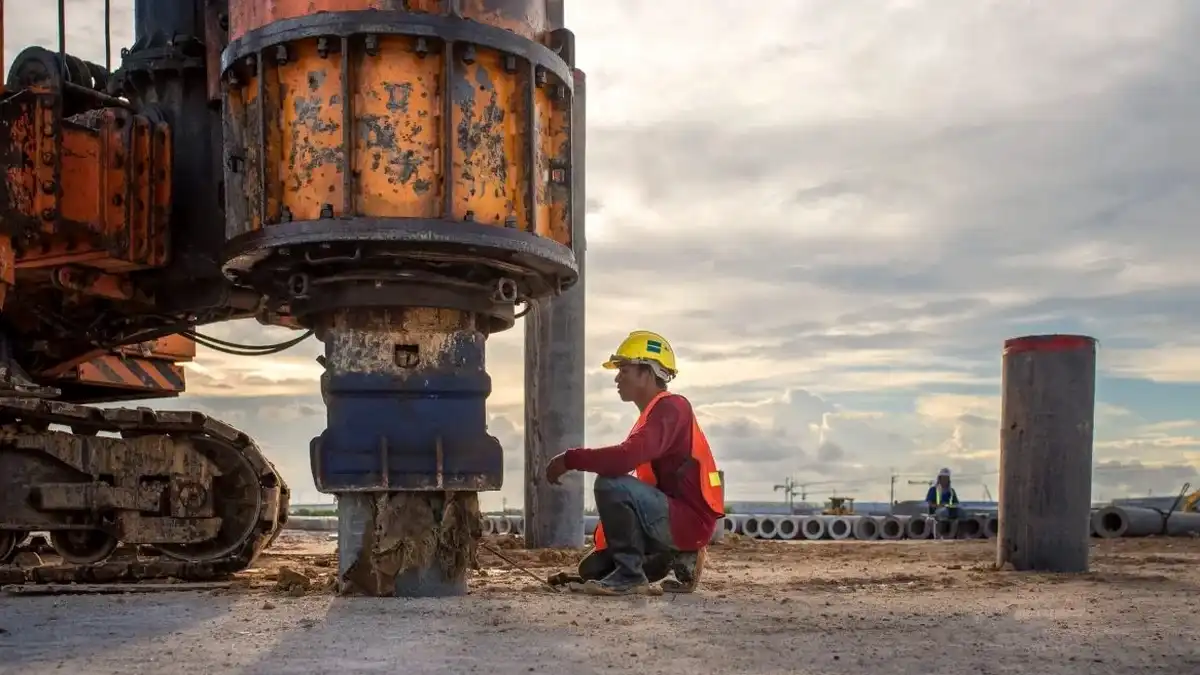
Working with the ground in Huntsville means accounting for the limestone bedrock that sits beneath much of the city. The karst topography creates a variable soil mantle where loose sands, silts, and residual clays can coexist within a single site footprint. We often see projects near Research Park Boulevard where the upper 20 feet show erratic density, a condition that complicates shallow foundation performance. Vibrocompaction design provides a controlled method to densify these granular deposits before structural loads are applied. By sending depth-specific vibration energy from a probe, the soil skeleton rearranges into a tighter packing arrangement. The result is a more uniform bearing stratum that reduces the risk of differential settlement. For sites where the overburden is predominantly granular, this technique integrates well with standard exploration data from an SPT drilling program, allowing us to calibrate the compaction grid and energy input to the actual subsurface profile encountered during the investigation phase.

In Huntsville's karst terrain, vibrocompaction design must balance densification energy against the risk of vibration reflection from shallow bedrock pinnacles.
Our service areas

Process and scope

A recent warehouse expansion near the Huntsville International Airport illustrated the typical challenge. The geotechnical report showed loose to medium dense sands with SPT N-values ranging from 4 to 11 between depths of 5 and 25 feet, underlain by limestone pinnacles. The owner needed 4,000 psf bearing capacity across the entire slab footprint but the variability was unacceptable for rack loading. Our vibrocompaction design targeted a relative density above 70 percent across the treatment zone. We specified a triangular grid at 7-foot spacing and a probe frequency that matched the grain size distribution obtained from the grain size analysis performed on the initial borings. Post-treatment CPT verification confirmed the improvement, with cone tip resistances climbing from an average of 30 tsf to over 80 tsf in the treated mass. The karst interface required careful depth control to avoid driving energy into the rock pinnacles, which would have reflected vibration and reduced efficiency. This kind of site-specific adaptation is what separates a generic compaction spec from a design grounded in local geology.
Vibrocompaction Design in Huntsville: Ground Improvement for Karst and Residual Soils
Technical reference — Huntsville

Local geotechnical context

ASCE 7-22 and the IBC require that foundation soils provide adequate bearing and limit settlement under the design loads, including seismic combinations. In Huntsville, the combination of loose granular overburden and irregular bedrock creates a condition where untreated soils can densify during a seismic event, producing sudden settlement that the structural frame was not designed to absorb. The U.S. Geological Survey maps place Madison County in a moderate seismic hazard zone, influenced by the Eastern Tennessee Seismic Zone. While peak ground accelerations are lower than in western states, the long-period response of deep soil columns can amplify ground motion at certain frequencies. Vibrocompaction design addresses this by pre-densifying the soil mass, reducing the potential for seismically-induced volumetric strain. The design must also account for the depth to rock, because vibration energy reflects upward from the limestone interface and can create zones of lower density if the grid and energy are not adjusted. We incorporate site-specific shear wave velocity targets derived from MASW surveys to confirm that the treated ground meets the performance criteria before structural loads are applied.

Need a geotechnical assessment?

Reply within 24h.

Email: contact@geotechnical-engineering1.org

Reference standards

IBC 2021 (International Building Code, adopted by City of Huntsville), ASCE 7-22 Minimum Design Loads and Associated Criteria for Buildings and Other Structures, ASTM D1586 Standard Test Method for Standard Penetration Test (SPT) and Split-Barrel Sampling of Soils, ASTM D2487 Standard Practice for Classification of Soils for Engineering Purposes (Unified Soil Classification System)

Technical data

ParameterTypical value
Target relative density (Dr)70-85% for structural support; 60-70% for slab-on-grade
Applicable soil types per ASTM D2487SP, SP-SM, SM, ML with fines content < 12-15%
Typical treatment depth range15 to 65 ft below grade (limestone refusal dependent)
Probe energy input130-180 kW variable frequency, adjusted per grain size curve
Grid configurationTriangular 6-10 ft spacing, verified by pre-production test section
Post-treatment verification methodCPT, SPT, or PMT per project specification
Settlement reduction target< 0.5 inch differential under design load

Questions and answers

What does vibrocompaction design cost for a typical commercial site in Huntsville?

For a standard commercial or light industrial site in the Huntsville area, the engineering design package for vibrocompaction typically ranges from US$1,300 to US$6,000 depending on the treatment area size, depth of densification required, and the complexity of the karst bedrock surface. A smaller footprint with uniform soil conditions falls toward the lower end, while a larger site with highly variable pinnacled rock and deeper treatment zones requires more design effort and verification planning.

How does the limestone bedrock in Huntsville affect vibrocompaction performance?

The limestone pinnacles and irregular rock surface common in Madison County create a hard boundary that reflects vibration energy upward. If the probe tip approaches within 3 to 5 feet of the rock, the reflected energy can reduce densification efficiency and potentially damage equipment. Our designs incorporate pre-treatment rock surface mapping from borings or geophysical surveys so the treatment depth stops above the bedrock, ensuring energy stays within the granular overburden where it is effective.

What soil types are unsuitable for vibrocompaction?

Soils with more than 12 to 15 percent fines passing the No. 200 sieve generally do not respond well to vibrocompaction because the silt and clay fraction dampens the vibration and prevents effective grain rearrangement. Highly plastic clays and organic soils are also unsuitable. When a Huntsville site contains mixed granular and cohesive layers, we may recommend targeted treatment of the granular zones or a combined approach using stone columns for the cohesive portions.

How long does the vibrocompaction design and verification process take?

The design phase typically takes one to two weeks after we receive the geotechnical investigation data. We then specify a pre-production test section that is executed in one to two days on site, followed by verification testing. The full cycle from design kickoff to final acceptance report usually spans three to four weeks, though larger sites with multiple treatment zones may extend the schedule.

Location and service area

We serve projects in Huntsville and surrounding areas.

View larger map