GEOTECHNICAL ENGINEERING
HUNTSVILLE
HomeLaboratoryLaboratory CBR test

Laboratory CBR Testing in Huntsville, AL

Geotechnical engineering with regional judgment.

LEARN MORE

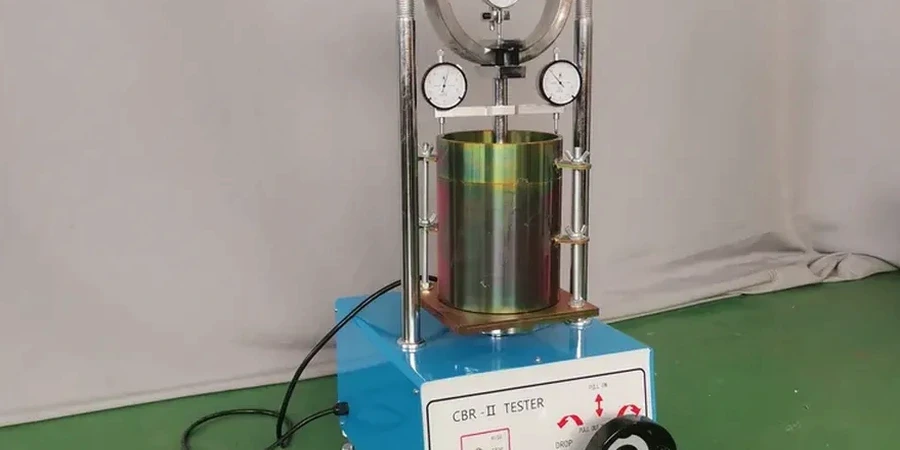
Huntsville sits at 600 feet above sea level, where the transition from the Highland Rim to the Tennessee River Valley creates a patchwork of residual clays and cherty limestone. Road failures here often trace back to one missing data point: the soaked CBR value. The laboratory CBR test measures what happens to subgrade strength after saturation, and in a region where annual rainfall exceeds 55 inches, that matters. We run ASTM D1883 procedures on compacted specimens from sites across Madison County, from Research Park Boulevard extensions to residential streets in Hampton Cove. Each test quantifies the load-penetration response that governs pavement thickness design, and we pair it with grain-size analysis when the material classification needs confirmation.

A CBR value from a field-moist sample tells you the best-case scenario; the soaked value tells you what the subgrade will actually deliver after the first heavy rain season.
Our service areas

Process and scope

In Huntsville, we frequently see contractors surprised by the drop in bearing capacity when a decent-looking red clay subgrade gets soaked. A material that reads 25% CBR at field moisture can collapse to 3% after 96 hours of immersion. That is the reason DOT specifications require soaked values. Our lab compacts specimens at modified Proctor energy, applies a 10-pound surcharge, and submerges them in water for four days before penetrating with a 0.05-inch-per-minute piston. The load at 0.1-inch and 0.2-inch penetration gets compared against standard crushed stone reference values to produce the CBR number. We test both field-moist and soaked conditions when the project schedule allows, and we report the swelling percentage during soak, which is critical for the expansive soils found near the old cotton-farming zones south of Martin Road.
Laboratory CBR Testing in Huntsville, AL
Technical reference — Huntsville

Local geotechnical context

Subgrade behavior differs sharply between the limestone bench neighborhoods in southeast Huntsville and the alluvial flatlands west of Athens Pike. In the hills, weathered chert residuum can deliver CBR values above 20% when compacted dry of optimum. Move three miles west into the floodplain silts near Indian Creek, and soaked CBR drops below 5%. A pavement section designed for one condition will fail rapidly if applied to the other. The problem compounds when fill materials from different borrow sources get mixed on site. Without laboratory CBR values for each distinct material layer, the AASHTO 1993 pavement design equation produces thicknesses that are either wasteful or dangerously thin. We see this pattern repeatedly on industrial access roads in the Jetplex area, where varied cut-and-fill operations create subgrade profiles that look uniform from the surface but perform very differently under traffic loading.

Need a geotechnical assessment?

Reply within 24h.

Email: contact@geotechnical-engineering1.org

Reference standards

ASTM D1883-21 (CBR of Laboratory-Compacted Soils), ASTM D1557 (Modified Proctor Compaction), AASHTO T 193 (CBR of Soils in Place), ALDOT Standard Specifications for Highway Construction

Technical data

ParameterTypical value
StandardASTM D1883-21
Compactive effortModified Proctor (56,000 ft-lbf/ft³)
Soak period96 hours submerged
Surcharge weight10 lb annular surcharge
Penetration rate0.05 in/min
Key readingsLoad at 0.1 in and 0.2 in penetration
Reported valuesCBR at 0.1 in, 0.2 in, and swelling %

Questions and answers

What does a laboratory CBR test cost in Huntsville?

A standard soaked CBR test runs between US$130 and US$220 per point, depending on the number of specimens and whether classification testing is bundled. Multi-point jobs for borrow source evaluation are priced per project scope.

How long does a soaked CBR test take?

Four days of soaking plus about half a day for compaction, setup, and penetration testing. We typically report results within five business days from sample acceptance.

Do you test in-place CBR or only laboratory-compacted samples?

We offer laboratory CBR per ASTM D1883 on compacted specimens. For in-place CBR, refer to field CBR testing. The lab method controls moisture and density precisely, which makes it the preferred approach for pavement thickness design using AASHTO 1993.

What moisture condition should I request for a Huntsville pavement project?

Soaked CBR is standard for ALDOT pavement design. The four-day immersion simulates long-term saturation under an impermeable pavement surface. Unsoaked values are supplementary and should not be used alone for design unless the subgrade is demonstrably free-draining.

Location and service area

We serve projects in Huntsville and surrounding areas.

View larger map