GEOTECHNICAL ENGINEERING
HUNTSVILLE

Geotechnical Engineering in Huntsville

Geotechnical engineering with regional judgment.

LEARN MORE

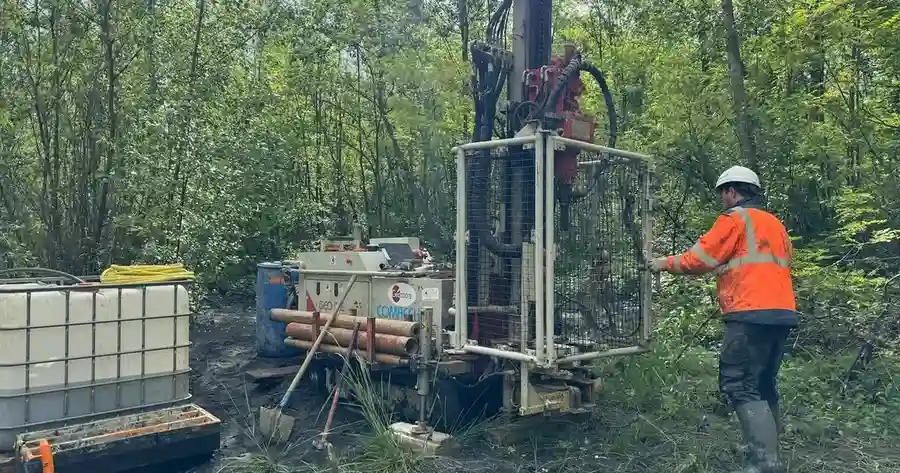
The first thing any contractor notices breaking ground around Huntsville is the limestone. It's everywhere—part of the Tuscumbia Limestone and Fort Payne Chert that form the bedrock beneath the city. At 34.7298° N, you're dealing with a karst landscape, which means solution cavities, irregular rockheads, and a weathered mantle of red clay that changes depth drastically within a single lot. A proper soil mechanics study here isn't a box-checking exercise. It's how you figure out whether your footings will bear on competent rock or if you'll hit a soft clay seam five feet down. We run the full program—from grain-size distribution to shear strength—so your structural engineer knows exactly what parameters to plug into the design. When we drill near Monte Sano or probe a site off Research Park Boulevard, we're looking for chert float, clay seams, and any sign of past solutioning that could mean a sinkhole risk down the road.

Limestone bedrock in Huntsville can be solid at 3 feet or vanish into a clay-filled cut at 25 feet—within the same building pad.
Geotechnical Engineering in Huntsville
Technical reference — Huntsville

Our service areas

Local geology

Huntsville's humid subtropical climate means our residual clays go through serious wet-dry cycles. A sample taken in August can behave completely differently from one taken in February. That's why our soil mechanics study always pairs standard index testing with strength tests at multiple moisture contents. We don't just hand you a plasticity index and call it done. We run triaxial compression on undisturbed Shelby tube samples to get effective stress parameters—friction angle and cohesion—that reflect actual field conditions. For sites near the Tennessee River floodplain, where alluvial silts can extend 30 feet deep, we often recommend supplementing the geotechnical investigation with in-situ-permeability tests to confirm drainage assumptions before anyone designs a retention system. The goal is always the same: give the owner a set of numbers that hold up under scrutiny, whether it's for a tilt-wall warehouse in Cummings Research Park or a hillside custom home in Blossomwood.

Reference standards

IBC 2021 Chapter 18: Soils and Foundations, ASCE 7-22: Minimum Design Loads for Buildings and Other Structures, ASTM D1586: Standard Test Method for SPT and Split-Barrel Sampling, ASTM D2487: Practice for Classification of Soils for Engineering Purposes (USCS), ASTM D7012: Compressive Strength of Intact Rock Core Specimens, ASTM D4318: Liquid Limit, Plastic Limit, and Plasticity Index of Soils

Need a geotechnical assessment?

Reply within 24h.

Email: contact@geotechnical-engineering1.org

Visual overview

Why choose us

The mistake we see over and over in Madison County is treating the red clay like a uniform material. A builder will get one boring that hits rock at six feet and assume the whole site is the same. Then the excavator finds a clay-filled grike—a vertical dissolution channel in the limestone—that goes down eighteen feet. Suddenly the footing design doesn't work, and you're looking at either mass excavation with engineered fill or micropiles. A soil mechanics study that only samples the weathered zone and ignores the rock surface variability is worse than no study at all; it gives false confidence. That's why we core the rock where it's encountered and log every joint, vug, and clay seam. The IBC requires it for a reason, and the karst geology of the Tennessee Valley demands it.

Technical data

ParameterTypical value
Standard penetration test (SPT) per ASTM D1586N-values correlated to relative density and consistency
Unconfined compressive strength (rock cores)ASTM D7012, reported in psi with RQD log
Atterberg limits (liquid limit, plastic limit)ASTM D4318, plasticity chart classification
Consolidated-undrained triaxial shearEffective friction angle φ' and cohesion c'
Grain-size distribution (sieve + hydrometer)ASTM D6913 / D7928, full curve to clay fraction
One-dimensional consolidationCompression index Cc, recompression ratio Cr, preconsolidation pressure σ'p
Moisture content and unit weightASTM D2216 and D7263, reported per stratum
Soil classification (USCS)ASTM D2487, group symbol and description

Questions and answers

How deep do you have to drill for a soil mechanics study in Huntsville?

It depends entirely on the planned foundation loads and the depth to competent rock. For a typical slab-on-grade commercial building, we usually go 20 to 30 feet or until we've cored at least 10 feet of continuous limestone with good RQD, whichever is deeper. In areas near the Wheeler National Wildlife Refuge where alluvial deposits can be thicker, we may need to go 40 feet or more. We follow the IBC requirement that borings extend to a depth where the stress increase from the foundation is less than 10% of the existing overburden pressure.

What's the difference between a soil report and a real soil mechanics study?

A soil report might give you a boring log and some basic index properties. A soil mechanics study goes further—it quantifies how the soil will actually behave under load. We measure shear strength parameters, compressibility, and the stress history of the deposit. For Huntsville's residual clays, which are often overconsolidated from desiccation, knowing the preconsolidation pressure is the difference between predicting half an inch of settlement and three inches. The numbers matter when you're sitting on karst.

How much does a soil mechanics study cost for a typical lot in Huntsville?

For a standard single-family residential or small commercial lot in the Huntsville area, a complete soil mechanics study with drilling, sampling, and laboratory testing typically falls between US$3,440 and US$4,870. The final cost depends on access conditions, depth to rock, and how many lab tests the project requires. A site that needs rock coring and triaxial shear tests will be at the higher end; a straightforward SPT-based investigation with index testing lands lower.

Do I really need a soil mechanics study for a pole barn or workshop?

Legally, Madison County may not require it for an accessory structure under a certain square footage, but practically, it's cheap insurance. The red clay here can have a swelling potential that pops a slab if you don't account for it. We've seen pole barn posts heave out of the ground after a wet winter because nobody checked the plasticity index. A quick investigation with two borings and Atterberg limits tells you what moisture conditioning your subgrade needs before you pour.

Location and service area

We serve projects in Huntsville and surrounding areas.

View larger map

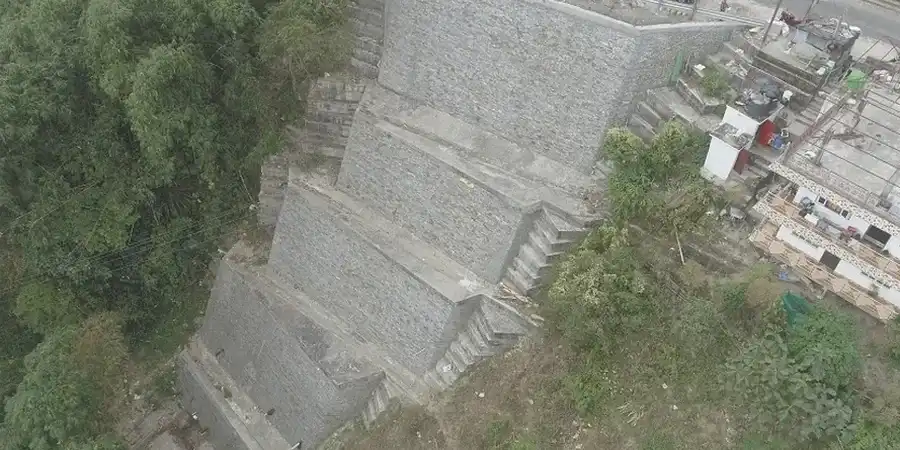
Slope stability and earth retaining structures demand rigorous analysis of soil mechanics and drainage to prevent failure. Practitioners rely on verified methods from geotechnical engineering to assess factor of safety and wall equilibrium under varying loads.