GEOTECHNICAL ENGINEERING
HUNTSVILLE
HomeRoadwayFlexible pavement design

Flexible Pavement Design for Huntsville’s Expanding Infrastructure

Geotechnical engineering with regional judgment.

LEARN MORE

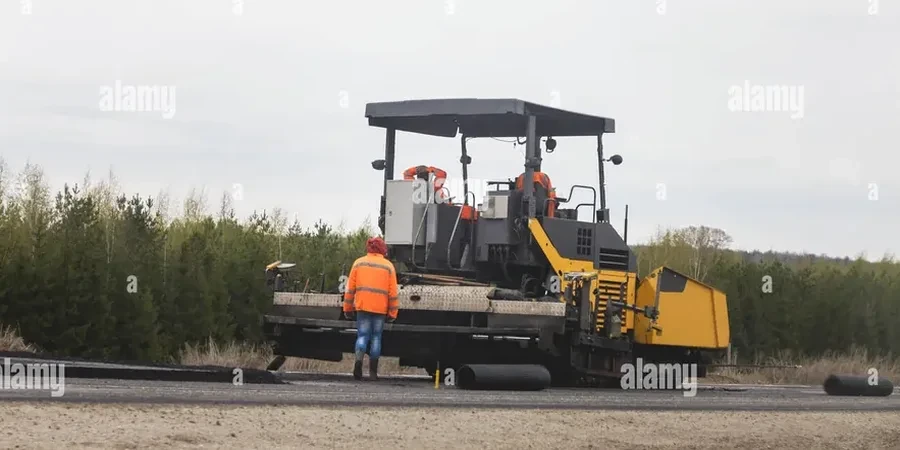
Huntsville’s growth story is written in asphalt. From the post-war expansion at Redstone Arsenal to the current boom in Cummings Research Park, the city has spread across a landscape where limestone bedrock hides just feet below the surface. We see the result in parking lots and access roads: premature cracking, edge failures, rutting from inadequate support. Our team approaches flexible pavement design with a clear understanding that the subgrade makes or breaks the pavement. Before we specify a single inch of asphalt, we run soil investigations that reveal what contractors here deal with every day — reactive clays in the valley floors, weathered chert in the uplands, and solution cavities that can open under repeated truck loads. The goal is a pavement section that performs for its design life without constant patching.

A pavement designed without subgrade data is just a guess. In Huntsville’s variable geology, that guess costs about three times more in maintenance over ten years.

Our service areas

Process and scope

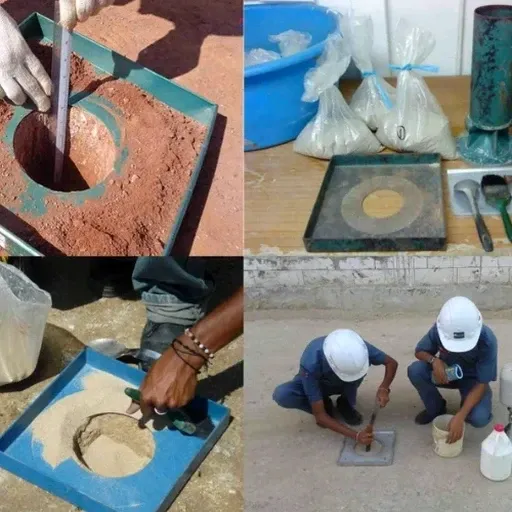
We often find that Huntsville projects specify a standard 3-inch asphalt over 6-inch aggregate base without checking whether the subgrade can actually support it. That approach works on well-drained soils near Monte Sano but fails badly in the Decatur Street corridor where moisture sits in the clay for weeks. Our flexible pavement design process starts with in-situ CBR testing and resilient modulus evaluation because AASHTO 93 structural numbers mean nothing without accurate inputs. We layer the pavement structure from the bottom up: stabilize weak subgrade with lime or cement where the plasticity index exceeds 20, specify a crushed aggregate base that meets Alabama DOT gradation bands, and select an asphalt binder grade appropriate for Huntsville’s summer pavement temperatures that routinely hit 140°F. For heavy industrial pavements serving distribution centers near the airport, we incorporate plate load testing to verify that the prepared subgrade meets the assumed modulus before the first lift of asphalt goes down.
Flexible Pavement Design for Huntsville’s Expanding Infrastructure
Technical reference — Huntsville

Local geotechnical context

The IBC and ASCE 7 establish performance requirements for pavements supporting emergency vehicle access and life-safety operations. In Huntsville, the risk equation includes a factor most pavement designs ignore: karst. Limestone dissolution creates voids that migrate upward over time, and a standard pavement section provides zero warning before collapse. We have mapped sinkhole-prone corridors along the eastern edge of the city where CPT testing reveals soft zones at depths of 15 to 40 feet that would never appear in a standard boring log. When a distribution center or fire station access road sits above these features, the pavement design must incorporate geogrid reinforcement or a thicker aggregate bridging layer. Skipping this step puts the owner in a position where a single heavy delivery truck could punch through the pavement surface on a rainy Tuesday afternoon with no prior distress visible.

Need a geotechnical assessment?

Reply within 24h.

Email: contact@geotechnical-engineering1.org

Reference standards

AASHTO 93 (Guide for Design of Pavement Structures), AASHTOWare Pavement ME Design (MEPDG), ASTM D1883 (CBR of Laboratory-Compacted Soils), ASTM D698 / D1557 (Compaction Characteristics of Soil), ASTM D2487 (Unified Soil Classification System)

Technical data

ParameterTypical value
Design traffic (ESALs)0.3 to 30 million (flexible pavement spectrum)
Asphalt layer thickness3 to 8 inches (structural section dependent on subgrade)
Aggregate base thickness6 to 14 inches (crushed limestone, ALDOT 825 gradation)
Subgrade CBR minimum6% or higher; stabilization required below CBR 3
Binder PG gradePG 67-22 or PG 76-22 for high-traffic industrial pavements
Design methodAASHTO 93 and MEPDG (Mechanistic-Empirical)
Drainage coefficient0.8 to 1.2 (adjusted for Huntsville's 55-inch annual rainfall)

Questions and answers

How much does a flexible pavement design for a commercial parking lot in Huntsville cost?

For a typical commercial project, the design and subgrade investigation ranges from US$1,680 to US$4,530. The final number depends on the lot size, the number of soil borings required, and whether we need to run resilient modulus testing in addition to standard CBR.

What makes Huntsville’s soils different for pavement design?

Two things stand out: the residual clays derived from limestone weathering have high plasticity and swell potential, and the underlying bedrock contains solution features. A pavement design that works in Birmingham can fail here because the subgrade moisture regime is different and the karst risk is real.

Do you use AASHTO 93 or the newer MEPDG method?

We use both depending on the project. AASHTO 93 is faster and sufficient for lower-traffic pavements. For high-ESAL industrial pavements or projects where the owner wants to optimize layer thicknesses, we run the full mechanistic-empirical analysis with Huntsville climate data and site-specific material characterization.

What pavement distresses do you design to prevent?

We design against rutting from inadequate structural capacity, fatigue cracking from repeated traffic loads, and thermal cracking from temperature swings. In Huntsville specifically, we also address moisture-related distress: stripping within the asphalt layer and subgrade softening under poorly drained conditions.

How long does the design process take?

The field investigation typically takes two to three days on site. Laboratory testing runs about one week for standard CBR and classification tests, or up to three weeks if resilient modulus is required. We deliver the final design report within two weeks of completing all testing.

Location and service area

We serve projects in Huntsville and surrounding areas.

View larger map